SK On presidential award: Tips for battery supply chain
An award for SK On highlights the shifting dynamics of the global energy landscape. The company received a presidential award for its role in strengthening the battery supply chain, a critical factor as market leaders navigate changing economic policies.
This recognition comes amid a period of significant transition in the energy sector. While the electric vehicle market faces headwinds, the energy storage system sector is showing unique growth patterns.
Key takeaways: 1. The global battery market is experiencing diverging growth rates between EV and ESS sectors. * Market leaders are leveraging production capacity and vertical integration to maintain dominance. * Regulatory changes in major economies are reshaping global market shares.
How does the SK On presidential award reflect market shifts?
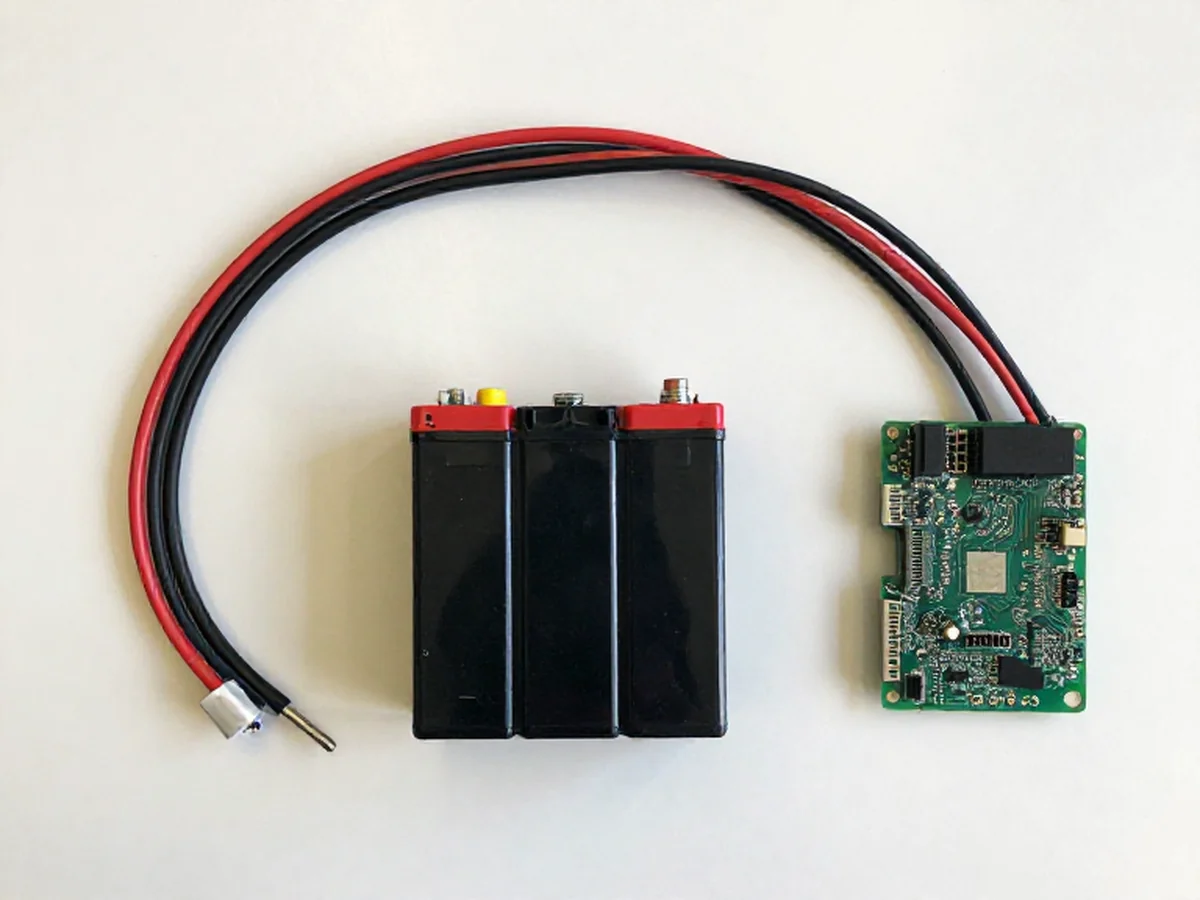
A technician inspects a high-capacity battery cell under bright laboratory lights. The SK On presidential award serves as a marker of achievement in a highly competitive global landscape where supply chain reliability is paramount.
The award recognizes efforts to secure a stable battery supply chain. As market conditions change, companies that build robust infrastructure face different challenges than those solely focused on consumer vehicles.
According to technical analysis, the global battery market is seeing a split in momentum. While EV-specific battery growth is expected to be under 20% in 2026, the ESS sector is projected to grow by more than 25% during the same period.
This divergence means that companies focusing on industrial-scale storage may find different opportunities than those tied strictly to the automotive market. The award highlights the importance of these strategic diversifications.
What are the competitive dynamics of the global battery market?
An engineer monitors a digital dashboard displaying real-time production metrics. Understanding the competitive landscape requires looking at the market shares of major global players. According to the IEA, global battery additions reached 108 GW in 2025.
The market is currently led by high-capacity producers. For instance, CATL holds a global market share of approximately 38% as of the first half of 2025, with a production capacity of about 243.3GWh.
Other players follow with distinct strategic advantages. BYD maintains a 16% global share through vertical integration, while LG Energy Solution holds 13% through customer diversification.
Panasonic currently holds a 6% share, focusing on quality and its partnership with Tesla. Samsung SDI holds 5%, while SK On also maintains a 5% market share.
| Company | Global Market Share |
|---|---|
| CATL | 38% |
| BYD | 16% |
I observed how these different strategic paths, from vertical integration to specialized partnerships, shape the current industry hierarchy.
Why is the EV market facing unique challenges?

A driver stares at a charging station in a quiet, overcast parking lot. The EV market is navigating a complex web of regulatory changes and shifting consumer subsidies.
Global electric vehicle sales are expected to decrease by 16% compared to the previous year due to policy shifts. These include the potential removal of EV tax credits in the United States and subsidy reductions in Europe.
In the United States, while the IRA AMPC (Advanced Manufacturing Production Credit)-related trends remain, EV subsidies are expected to shrink. In Europe, the market is shifting toward entry-level EVs to meet CO2 regulations, leading to intense competition in the mid-to-low-end segments.
Meanwhile, in China, LFP (Lithium Iron Phosphate) battery-based price competitiveness continues to drive market share expansion. These regional variables create a volatile environment for manufacturers.
How is the supply chain evolving for different sectors?
A logistics manager tracks a shipment of raw materials on a tablet. The evolution of the supply chain is heavily influenced by the specific needs of different battery applications.

The growth of the energy storage sector provides a counterbalance to the fluctuations in the EV market. The projected 25% growth in ESS batteries offers a different trajectory for companies managing raw materials.
In the EV sector, the focus remains on energy density and charging speed. For example, some companies are targeting solid-state batteries for mass production by 2030 to meet these demands.
The supply chain must remain flexible to handle both the high-volume needs of the automotive industry and the steady, large-scale requirements of the energy storage sector.
What are the limitations of current market projections?
A researcher reviews a series of data graphs on a large monitor. While projections provide a roadmap, they are subject to sudden changes in geopolitics and technology.
The projected decline in Korean battery market share from 19% in 2025 to 16% in 2026 illustrates the difficulty of maintaining dominance against rising competitors.

A significant limitation is that these forecasts are contingent on political stability and the continuation of specific subsidy regimes. If regulatory environments shift more drastically than expected, the projected growth rates for both EV and ESS sectors may change.
- How does the SK On presidential award reflect market shifts?
- What are the competitive dynamics of the global battery market?
- Why is the EV market facing unique challenges?
The same subject is also called SK On supply chain award.
The same subject is also called Battery strength award SK On.
The same subject is also called SK On manufacturing praise.
The same subject is also called ESS EV battery award.
This part also covers SK On battery tech award.
This part also covers President honors battery maker.
SK On battery tech award
Related
- Battery material Samsung SDI award Battery Day 45% increase
- Why LG Energy Solution research contest drives battery tech
How does supply chain resilience compare across market segments?
The award for SK On highlights the necessity of a resilient supply chain, a factor that differs between the two primary battery markets.
In the energy storage system sector, the steady, large-scale requirements necessitate a robust and consistent flow of raw materials.
Conversely, the EV sector, while demanding high energy density, must also adapt to the rapid pace of technological changes, such as the pursuit of solid-state batteries.
This contrast shows that supply chain strength must be tailored to the specific demands of each application, whether it is high-volume automotive use or industrial storage deployment.






Comments 0