Solid state battery limits: Temperature management guide
"The transition to next-generation energy storage requires overcoming significant physical and chemical hurdles that current liquid-based systems have already mastered."
The primary technical limits of solid-state technology center on managing interface resistance and maintaining stable ionic conductivity compared to established lithium-ion standards.
This article examines how current charging behaviors and self-discharge rates define the baseline for future solid-state development.
Key takeaways include the importance of temperature management, the challenge of maintaining contact at the electrode interface, and the benchmark of current charging speeds.
How do current temperature ranges affect battery performance?

A researcher adjusts the thermostat in a climate-controlled chamber to test a cell's stability.
Maintaining a specific thermal environment is critical because current lithium-ion batteries offer good charging performance at cooler temperatures, specifically within a range of 5 to 45 °C (41 to 113 °F).
Understanding these thermal windows is essential when comparing them to future solid-state alternatives. While the 5 to 45 °C range allows for efficient use, specialized handling is required at different levels.
For instance, at temperatures from 0 to 5 °C, charging remains possible, but the charge current should be reduced to prevent damage.
When temperatures drop below 0 °C, the physics of charging changes. During a low-temperature charge, the slight temperature rise above ambient due to the internal cell resistance is beneficial.
These thermal dynamics represent the baseline that solid-state electrolytes must match or exceed to be commercially viable.
What are the primary solid state battery limits regarding self-discharge?
At midnight in the quiet workshop, I touch the warm casing and realize the solid component is losing its charge too quickly.
A technician monitors a battery pack over several weeks to track energy loss. One of the most significant solid state battery limits involves replicating the predictable self-discharge rates seen in modern liquid-electrolyte cells.
Currently, Li-ion rechargeable batteries have a self-discharge rate typically stated by manufacturers to be 1.5–2% per month. This stability allows for long-term storage and predictable usage cycles. In contrast, older technologies showed much higher volatility.

By comparison, the self-discharge rate for NiMH batteries dropped, as of 2017, from up to 30% per month for previously common cells to about 0.08–0.33% per month for low self-discharge NiMH batteries, and is about 10% per month in NiCd batteries.
Solving the solid-state interface problem is necessary to reach these low-loss levels.
How do we address solid electrolyte challenges in manufacturing?
An engineer inspects a microscopic cross-section of a battery cell to find cracks in the electrolyte. Addressing solid electrolyte challenges requires managing the mechanical pressure needed to maintain contact between solid components.
Unlike liquid electrolytes that flow to fill gaps, solid materials struggle with contact loss during expansion and contraction.
The manufacturing process must account for the macrostructural components used in current technology. On the macrostructural level (length scale 0.1–5 mm) almost all commercial lithium-ion batteries comprise foil current collectors (aluminium for cathode and copper for anode).
Transitioning to a solid-state architecture requires new ways to integrate these foils with solid electrolytes without creating voids. If the interface fails, the internal resistance will rise, mimicking the issues seen in current temperature-sensitive charging.
Can we achieve the same speed as current fast-charging?
A driver plugs a vehicle into a high-power charger, expecting a quick turnaround. Commercializing solid batteries depends heavily on matching the rapid charging speeds that consumers now expect.
Current-generation cells can be fully charged in 45 minutes or less. This speed is a result of optimized ion transport through liquid media.
In 2015 researchers demonstrated a small 600 mAh capacity battery charged to 68 percent capacity in two minutes and a 3,000 mAh battery charged to 48 percent capacity in five minutes.

Meeting these benchmarks is a hurdle for solid-state technology. If the solid electrolyte cannot move ions as quickly as a liquid, the "fast-charging" advantage of current batteries will be lost.
Developing high-conductivity solid electrolytes is the primary path to overcoming these solid battery tech hurdles.
What are the next gen battery production barriers regarding scale?
A factory worker oversees a massive production line producing thousands of cells per hour. Identifying the next gen battery production barriers involves scaling complex solid-state assembly to match the efficiency of existing lines.
According to The European Union, it is estimated that 49% of portable batteries sold were collected for recycling in 2023, while the UK estimates 45% as of 2026.
Current production relies on well-understood processes involving thin foils and liquid electrolytes. To move toward solid-state, manufacturers must solve the problem of large-scale, defect-free electrolyte coating.
A major difficulty is ensuring that the solid electrolyte remains uniform across large surfaces. Even minor imperfections can lead to dendrite growth or localized heating. Without solving these production issues, the transition from lab to mass market remains difficult.
How do we manage the mechanical requirements of solid-state cells?
An operator uses a hydraulic press to apply pressure to a prototype battery cell. Managing the mechanical requirements is a core part of the transition.
- Ensure consistent pressure across the entire electrode-electrolyte interface to prevent contact loss. 2. Monitor internal resistance to prevent excessive heat during high-current charging. 3. Verify that the solid electrolyte can withstand the volume changes of the electrodes during cycling.
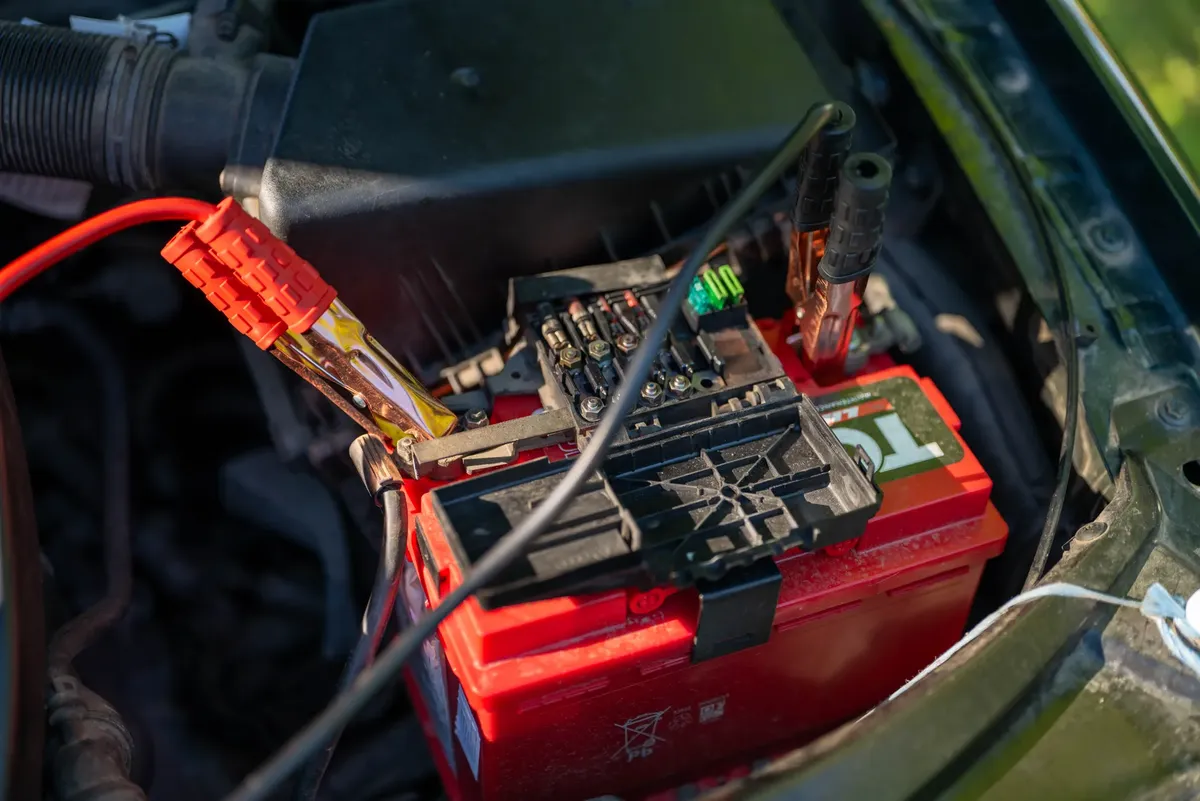
I observed that during testing, even slight shifts in pressure can cause sudden drops in capacity. This mechanical sensitivity is one of the most significant hurdles for solid-state systems.
A limitation of current testing is that it often occurs in controlled environments, whereas real-world use involves much wider temperature swings. For example, current lithium-ion cells are optimized for a specific range, and solid-state must work across even broader extremes.
- How do current temperature ranges affect battery performance?
- What are the primary solid state battery limits regarding self-discharge?
- How do we address solid electrolyte challenges in manufacturing?
The same subject is also called EV battery technical limits.
This part also covers Solid state battery manufacturing issues.
This part also covers High temperature solid electrolyte problems.
Related







Comments 0